

Communication Strategies That Strengthen National Cohesion
Communication Strategies That Strengthen National Cohesion
National cohesion has always been central to Singapore’s development. It is what enables long-term planning, social stability and shared progress. ForwardSG reinforces this by inviting citizens, businesses and communities to co-create a more resilient, caring and united future.
But cohesion is not achieved through policy alone. It depends on communication that builds trust, strengthens shared responsibility and reinforces a common identity. When institutions articulate purpose clearly and communicate impact honestly, they shape the confidence people have in the direction the country is taking.
Anchoring Communication in Shared Responsibility, Opportunity and Identity
ForwardSG reframes nation-building as a shared endeavor. Communication that supports this must show how responsibility is distributed, how opportunity is created and how national identity continues to evolve.
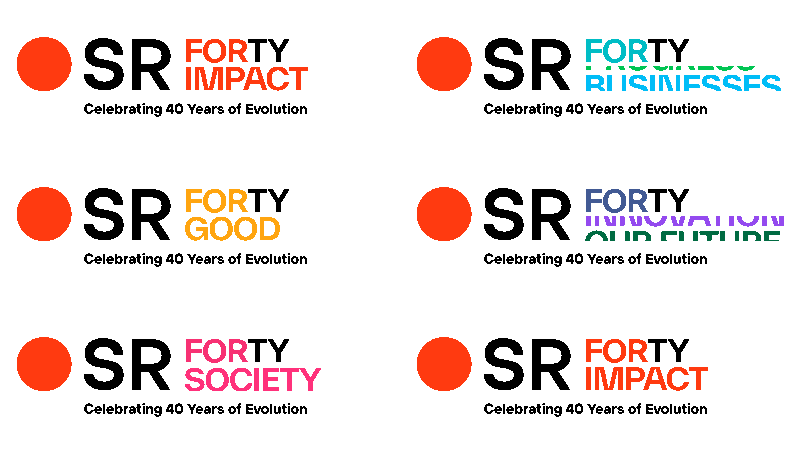
For citizens, this means clear explanations of why key decisions are made and how they contribute to long-term stability. For businesses, it means understanding how national priorities intersect with economic opportunity. This alignment is especially important for organisations like the Singapore Business Federation (SBF), where Sedgwick Richardson as SBF’s strategic branding agency in Singapore developed a refreshed brand to clarify SBF’s role as the conduit between government and the business community. By sharpening the narrative around its purpose, SBF strengthened the way it communicates opportunity and responsibility to its members and partners.
For communities, it means seeing how their efforts strengthen the social fabric. The aim is not just message delivery but meaning-making. Cohesion grows when people understand their role in the national project and see themselves reflected in its future.
Communicating Impact Authentically
Trust is strengthened when communication is grounded in facts, lived experiences and transparent reporting. Singapore’s model of governance depends on this clarity.
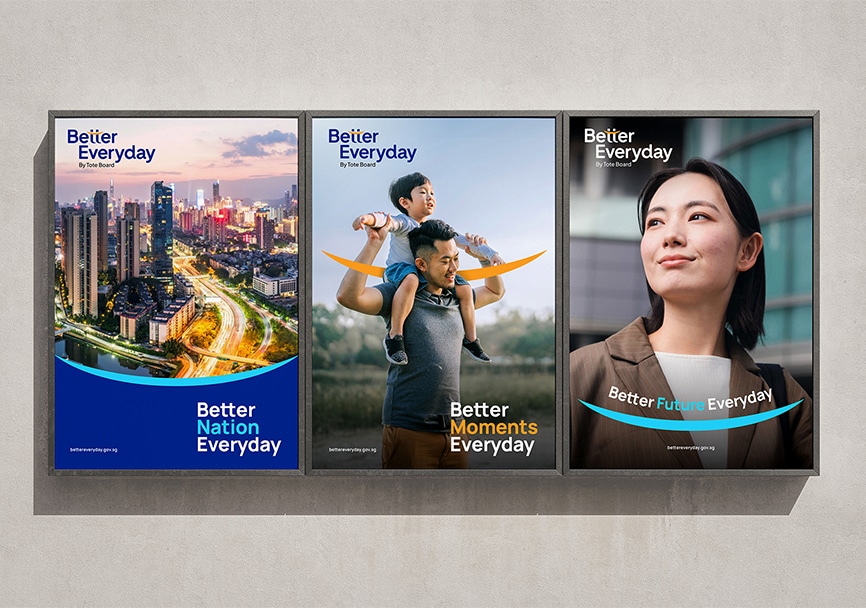
When public agencies describe policy impact, they do so with specificity rather than sentiment. Stories are paired with data. Aspirations are matched with evidence. This reinforces the understanding that progress is measured, deliberate and inclusive. A recent example of this approach can be seen in Tote Board’s strategic branding consulting work, where Sedgwick Richardson recommended creating the Better Everyday sub-brand to communicate the organisation’s social impact more clearly. By grounding the identity in optimism and thoughtful action, the sub-brand gives Tote Board a stronger platform for transparent reporting and storytelling, helping citizens better understand how its contributions improve lives across education, healthcare, community development and the arts.
Authentic communication does not rely on broad claims. It shows how change is created, who benefits and what outcomes can be expected.
What Institutions Can Do Differently
Start with clarity of purpose. Plan for alignment. Build with impact in mind.
Communication is most effective when it guides planning and decision-making from the outset. When public initiatives are anchored in purpose and expressed consistently, they build trust and strengthen cohesion.
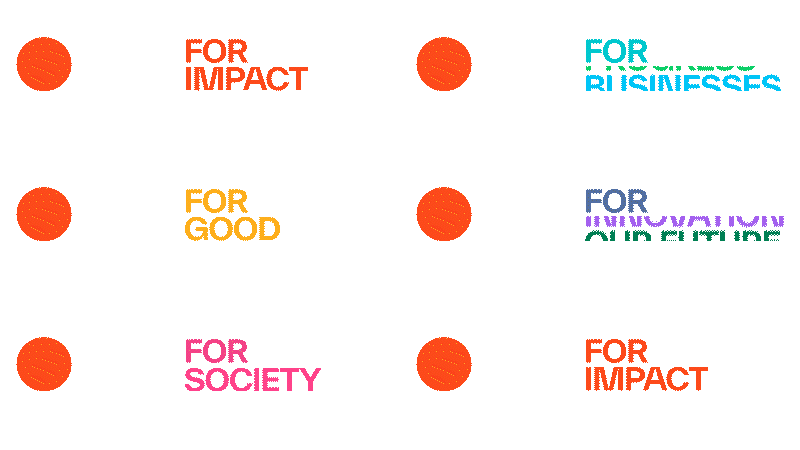
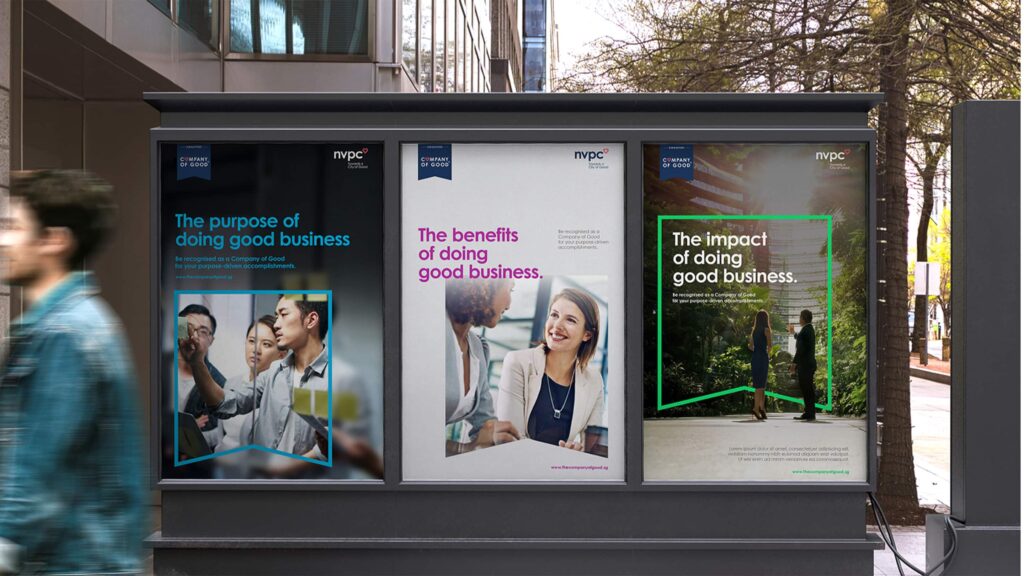
This approach has proven effective in Singapore. For NVPC’s Company of Good, SR delivered a brand strategy consulting solution in Singapore a refreshed identity that recognises organisations driving purpose across people, society, governance, environment and economic dimensions. This not only strengthened the visual system but also clarified how organisations can communicate impact and contribute to national progress. The work shows how a clear narrative and identity can help institutions convey purpose in ways that are relatable to citizens and credible to partners.
When institutions articulate purpose clearly and communicate with consistency, they support a shared understanding of progress and reinforce national cohesion.
Strengthening Cohesion Through Stakeholder-Centric Messaging
National cohesion depends on how well communications address the needs and expectations of different groups.
Citizens seek clarity about policies and their long-term impact. Businesses want visibility into how national priorities shape economic opportunity.
Community partners look for assurance that collaboration leads to meaningful outcomes. A strong communication strategy aligns these expectations without losing sight of the broader national purpose. It reinforces that every stakeholder plays a role in shaping Singapore’s future.
Advancing Singapore’s Shared Future
Singapore’s cohesion has always been shaped by communication that is honest, measured and forward-looking. ForwardSG strengthens this foundation by providing a collective roadmap for the next phase of nation-building.
The task for communicators today is to articulate purpose clearly, demonstrate impact with transparency and build alignment across diverse groups. When this happens consistently, communication becomes more than information-sharing. It becomes a strategic force that deepens trust, strengthens unity and supports the long-term resilience of the nation.
Reference
https://www.sedgwick-richardson.com/work/the-future-belongs-to-optimists/
https://www.sedgwick-richardson.com/work/empowering-singapore-business/
https://www.sedgwick-richardson.com/work/doing-good-business/